Introduction
As a developer with a deep interest in both technology and financial markets, I’ve always sought ways to leverage artificial intelligence (AI) to solve real-world problems. The world of trading, full of complex variables and shifting market conditions, presented the perfect challenge. I wanted to build something that could simplify one of the trickiest aspects of trading—understanding market volatility—and do so in a way that made it easy for both beginners and seasoned traders to use.
This journey led to the creation of the VIX Sentiment Seeker App, a full-stack application that harnesses the power of AI to interpret and track the VIX (Volatility Index) in real-time. The VIX, often referred to as the “fear gauge,” is a critical indicator of market volatility, but understanding its nuances can be complex. With this app, I aimed to bridge the gap between sophisticated data and actionable insights, making it easier for traders to navigate uncertain markets.
In this post, I’ll share the process I went through to create the VIX Sentiment Seeker App, how AI plays a central role in its functionality, and why understanding market volatility through tools like this is essential for trading success.
Trading is both an art and a science—a delicate balance between understanding market psychology, analyzing data, and making calculated decisions based on that analysis. As a developer with a passion for both technology and financial markets, I’ve spent years exploring ways to harness the power of artificial intelligence (AI) to build solutions that can help individuals navigate this complex landscape. My journey led me to create the VIX Sentiment Seeker application—an advanced, full-stack tool that leverages AI to make market volatility more understandable and accessible.
This application is open source and published here https://github.com/vfarhad/vix-sentiment-seeker
What is the VIX?
The VIX, often referred to as the Volatility Index, is a measure of market volatility, or more precisely, it reflects the market’s expectations for future volatility. It is based on the prices of S&P 500 index options and represents how much traders are willing to pay to protect their portfolios against potential market fluctuations.
In simpler terms, the VIX can be thought of as the “fear gauge” of the stock market. When the VIX is high, it indicates that investors are nervous, fearing that the market may experience significant swings or downturns. Conversely, when the VIX is low, it suggests that the market is calm and investors are relatively confident that there won’t be major surprises in the near future.
The VIX is calculated using the prices of out-of-the-money S&P 500 options, which are financial instruments that allow traders to hedge their positions against possible future market moves. By looking at how much people are willing to pay for these options, the VIX gives an indication of how volatile the market is expected to be in the coming 30 days.
Why Understanding VIX Is Crucial for Trading Success
The VIX offers key insights into investor sentiment, which can be a powerful tool in predicting market movements. To truly understand the VIX’s significance, it’s important to recognize how closely it is tied to market psychology.
The Problem: Understanding Volatility
Anyone who’s familiar with trading knows that market volatility is one of the most significant factors influencing decisions. When markets swing wildly, even the most seasoned traders can be thrown off course. But how do you measure volatility? How do you know when a market is on the brink of a massive shift or when it’s in a lull?
While there are many metrics to help assess market conditions, the VIX (Volatility Index) stands out as one of the most well-known. The VIX measures the market’s expectation of future volatility, reflecting the level of fear or greed in the market based on S&P 500 options prices. But despite its importance, tracking the VIX and interpreting its implications for trading can be difficult—especially when you need to make quick decisions based on dynamic, real-time data.
This is where the VIX Sentiment Seeker App comes in. Rather than just providing raw data on VIX levels, my goal was to create an application that not only tracks the VIX but also interprets its meaning using AI-driven insights.
The Development Journey: AI at the Core
Building the VIX Sentiment Seeker App wasn’t just about creating a tool that could display VIX data—it was about leveraging the power of artificial intelligence to make that data more actionable and understandable.
1. Full-Stack Development: The Technical Backbone
From a technical standpoint, I built the VIX Sentiment Seeker as a full-stack application, ensuring that it could handle real-time data processing, user customization, and dynamic analysis all within one seamless platform. This required integrating both the frontend and backend components efficiently.
On the backend, I used modern web technologies to ensure the app could process real-time data from various sources, including the VIX data feed and other market indicators. The frontend needed to be intuitive and responsive, providing users with clear and meaningful insights without overwhelming them with complex information.
The app was designed to be user-friendly, allowing both novice and experienced traders to track volatility, set alerts, and interpret the VIX’s behavior in the context of market sentiment.
2. AI-Powered Sentiment Analysis
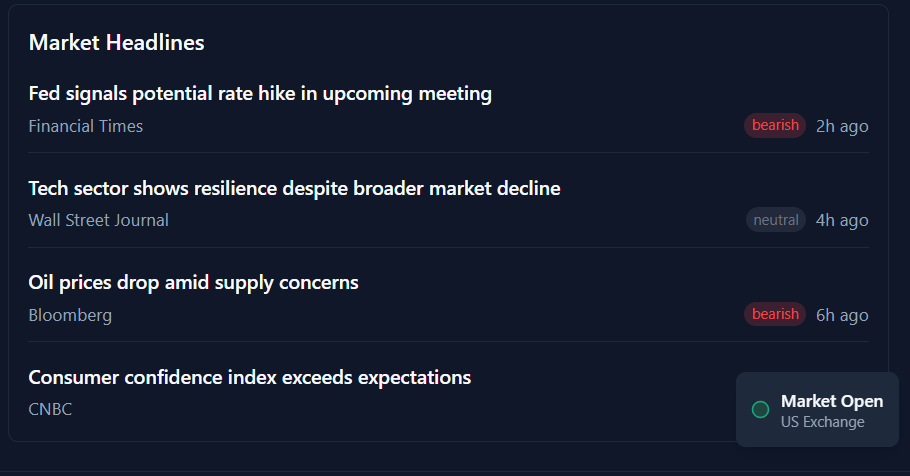
Where the application truly stands out is in its use of artificial intelligence to analyze market sentiment. I integrated machine learning models that examine not just the VIX levels but also historical patterns, broader market conditions, and even relevant financial news to generate a sentiment score for the market.
The AI sentiment analysis works by analyzing the data around the VIX, including its fluctuations and trends, and cross-referencing that with past market behavior. Based on this, it generates insights into whether the market is likely to be “fearful,” “neutral,” or “optimistic.” This sentiment score is designed to help traders understand the psychological mood of the market, which can be just as important as the raw data itself.
For example, if the VIX spikes significantly and the sentiment analysis tool flags it as a “fearful” market, the app may suggest caution, prompting users to rethink their positions or consider hedging. Conversely, if the VIX is low and sentiment is optimistic, traders may feel more confident in taking on higher-risk assets.
3. Predictive Analytics: AI in Action
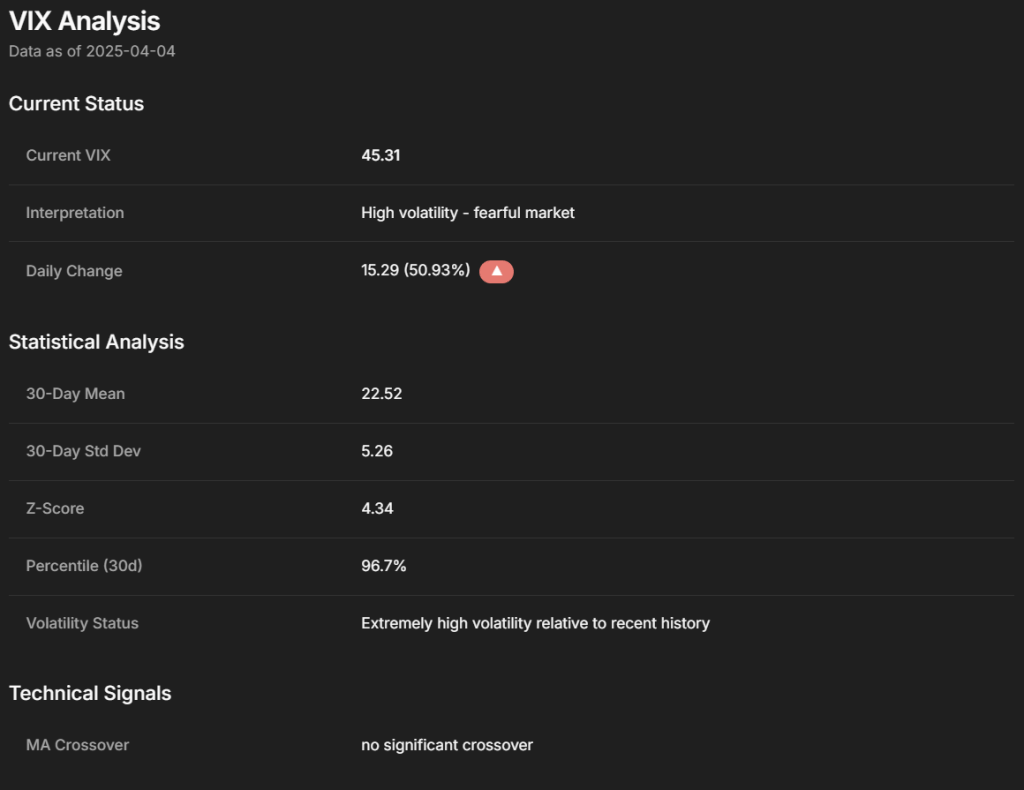
Beyond simple sentiment analysis, I wanted the app to go a step further—offering predictive insights. By applying machine learning algorithms to past VIX data and historical market trends, the app can suggest potential future movements in volatility.
The predictive model takes into account current market conditions, news sentiment, and the volatility patterns of previous market events to forecast where volatility may go next. While predictive analytics can never be 100% accurate, this feature helps users make better-informed decisions by offering data-driven predictions based on real-world patterns.
4. Real-Time Data Integration
A core feature of the app is its ability to provide real-time VIX tracking. Traders need up-to-the-minute information when making decisions, so I focused on integrating live data feeds into the app. As market conditions shift, the VIX data updates automatically, allowing users to stay informed without needing to refresh the page constantly.
In addition to VIX data, I also integrated additional market indicators such as the S&P 500 and Dow Jones, which can provide further context to the VIX movements. This helps users not only track volatility but also understand the broader market environment.
Features of the VIX Sentiment Seeker App
The VIX Sentiment Seeker App offers a range of features designed to empower traders by simplifying the complexities of market volatility:
1. Real-Time VIX Tracking
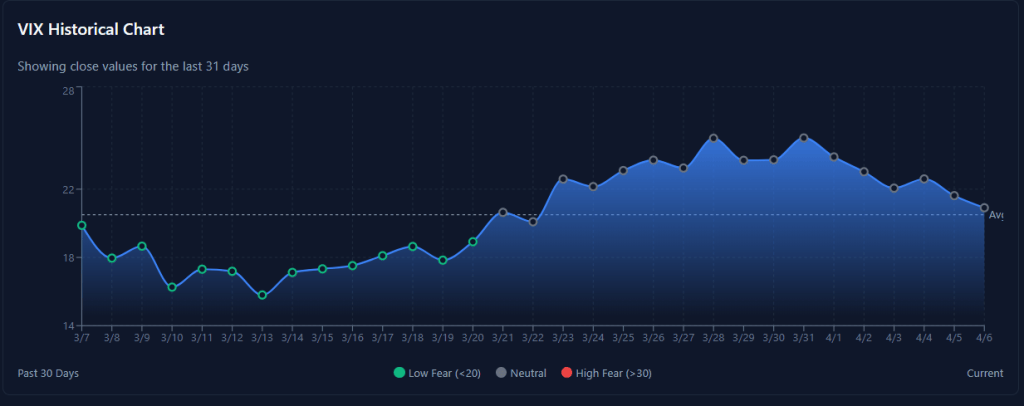
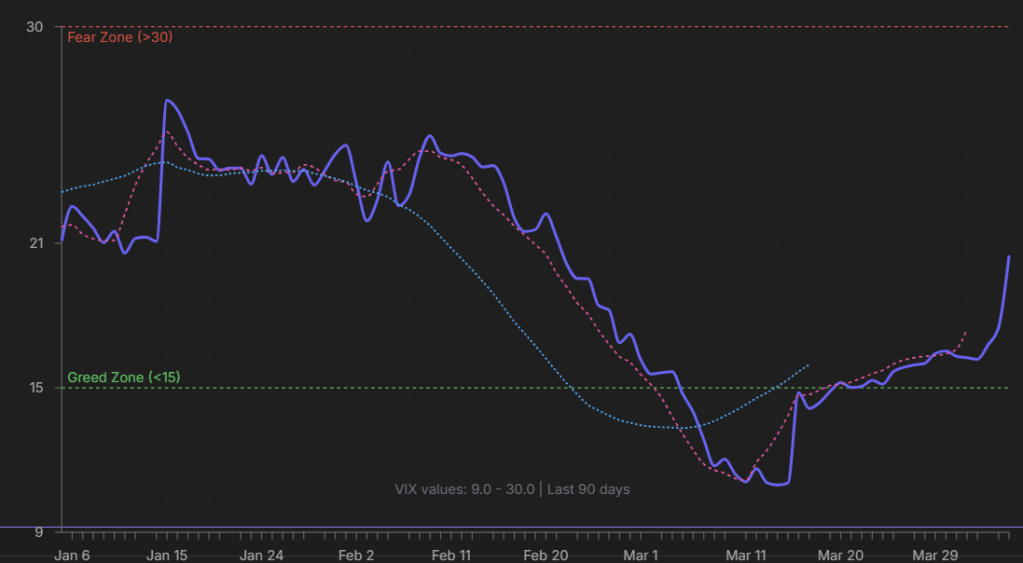
Track the latest VIX value, along with detailed historical data, so you can observe how volatility has evolved over different periods (daily, weekly, monthly). This helps you spot patterns and adjust your strategy accordingly.
2. AI-Driven Sentiment Analysis
An advanced feature powered by AI, this tool analyzes VIX trends, historical patterns, and market context to give you a sentiment score that reflects the market’s psychological state—whether it’s fearful, neutral, or optimistic.
3. Custom Alerts
Set up custom alerts to be notified when the VIX crosses a certain threshold or when significant sentiment changes occur. This ensures you never miss key market movements, even if you’re away from the app.
4. Risk Management Insights
Understand the level of risk associated with current market conditions. The app helps you assess how volatile the market is and provides suggestions on how to adjust your portfolio based on the current volatility levels.
5. Predictive Analytics
Using machine learning, the app can predict potential future movements in volatility based on historical data and current market conditions. This gives traders a glimpse of what might be coming, providing valuable foresight for making strategic decisions.
6. Educational Resources
For those new to the VIX or market volatility, the app includes tutorials and guides to help you better understand how the VIX works and how you can use it to improve your trading strategies.
Dashboard Overview
The VIX Sentiment Seeker App is designed with a few key components to give users a comprehensive view of market volatility:
- Real-Time VIX Data: Displays the current VIX value along with interactive charts that show historical data for different time frames (daily, weekly, monthly). This allows users to track the VIX’s behavior and trends over time.
- Sentiment Analysis: This AI-powered feature evaluates current and past VIX data to provide a sentiment score. It helps users understand whether the market is in a state of fear, neutrality, or optimism, which can guide trading decisions.
- Alerts & Notifications: Users can set custom alerts for specific VIX thresholds or sentiment shifts. Notifications will keep users informed of key changes in market conditions in real time.
- Risk Analysis: Provides a risk profile based on current volatility, helping users assess how risky the market is and adjust their strategies accordingly.
- Predictive Analytics: Uses machine learning to forecast potential future volatility trends based on historical patterns and current data, offering users insight into possible market movements.
- Educational Resources: Includes tutorials and articles for users who are new to volatility and the VIX, helping them understand how to use the app effectively.
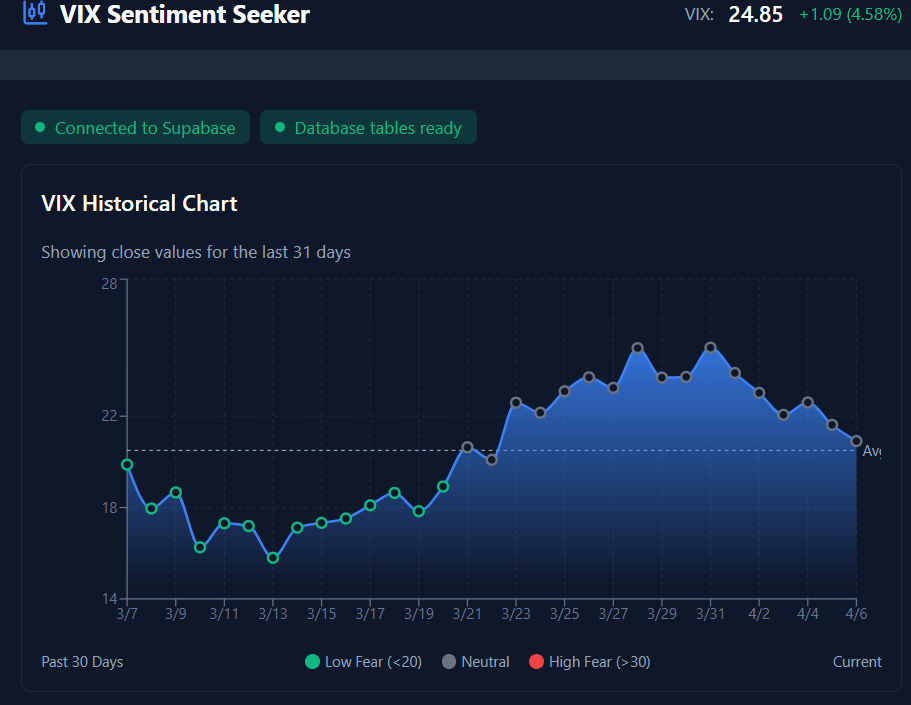
These components work together to give users actionable insights and help them manage their trading strategies in an ever-changing market.
Database design
The database design for the VIX Sentiment Seeker App is structured to efficiently manage and store historical data related to market volatility and performance, using Supabase as the backend. The design includes several key tables that capture different aspects of the market data:
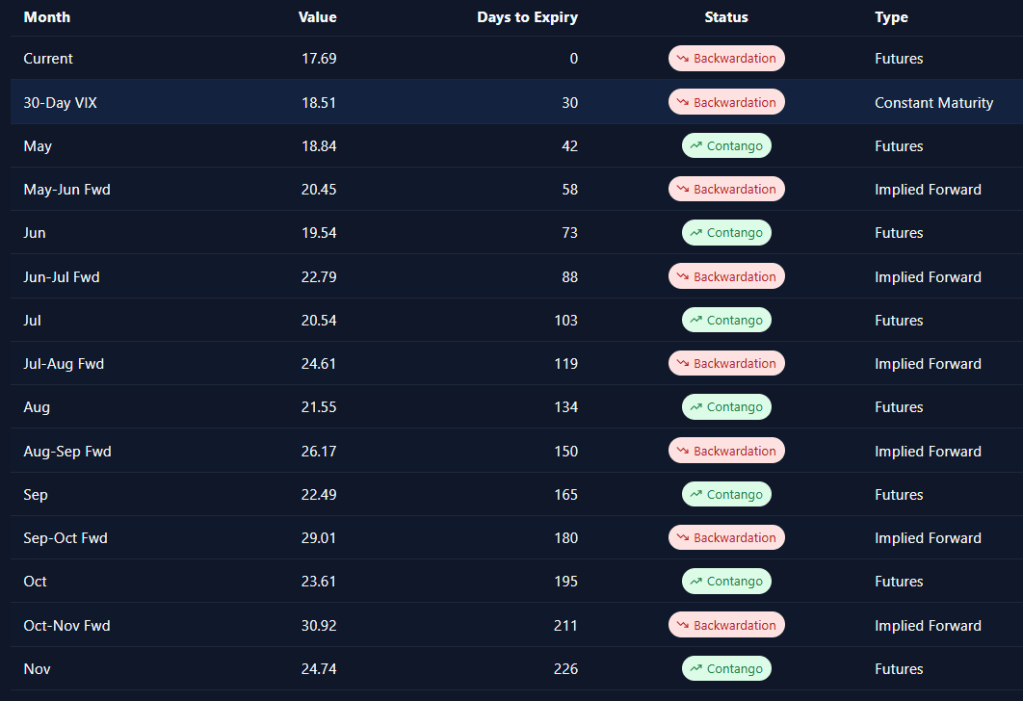
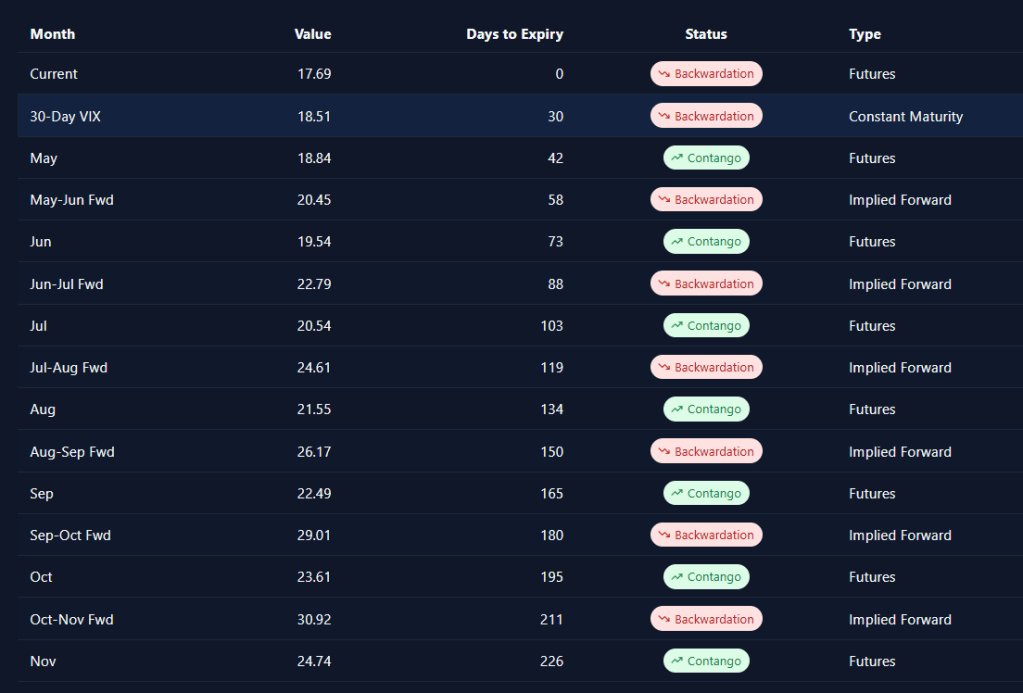
- vix_term_structure: This table stores data about the VIX term structure, including the calculation date, the month, the value of the VIX, days to expiration, and whether the market is in contango or backwardation. It also tracks maturity days and forward start and end dates, allowing for a comprehensive view of how VIX futures are structured.
- VIX_FUTURES_HIST_DATA: This table captures historical data for VIX futures, including the volatility index values and open interest (OI) for each date, providing insights into future market expectations of volatility.
- SP500_HIST_DATA: This table stores historical data for the S&P 500, including daily open, high, low, and close prices. This data is crucial for cross-referencing market trends and understanding how the VIX behaves in relation to the broader market.
- VIX_HIST_DATA: This table holds the historical VIX data, tracking daily open, high, low, and close prices of the VIX. It serves as the foundation for real-time volatility tracking and sentiment analysis in the app.
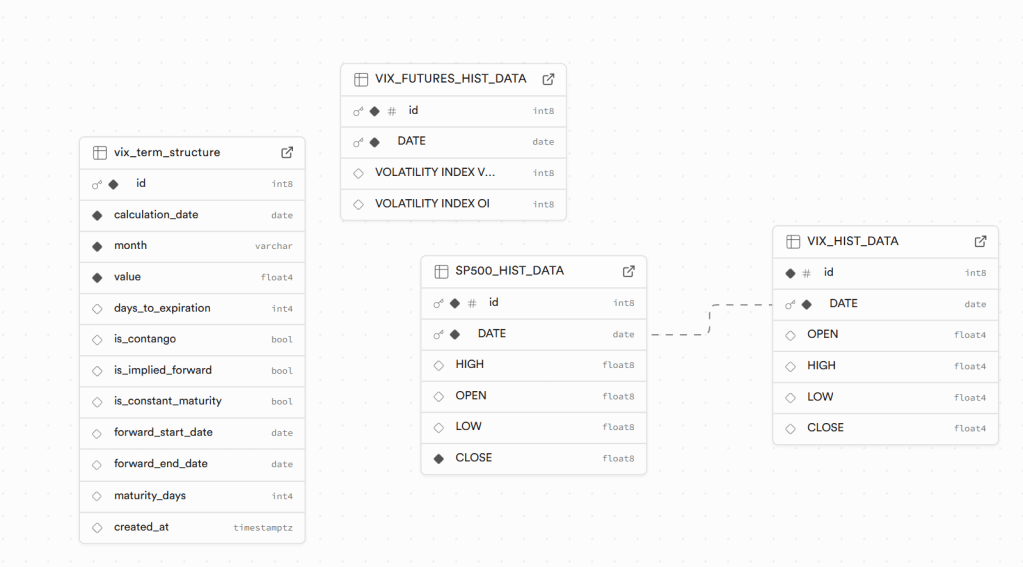
This relational database structure ensures that all relevant market data is captured and stored in a way that supports real-time analytics, sentiment analysis, and predictive insights for users of the app. By connecting historical VIX data with S&P 500 performance and VIX futures, the app can offer a comprehensive view of market conditions, enabling users to make data-driven decisions based on volatility trends and market sentiment.
Main Components of the Code
Instructions on how to clone, install dependencies, run development servers, and deploy the application.
- Data Fetching and Processing
Scripts or modules to fetch VIX data from APIs or CSV files (e.g., historical VIX values, put-call ratios, sentiment surveys).
Functions to clean, parse, and preprocess this data for analysis. - Frontend Interface
Built using React for dynamic user interactions.
UI components styled with Tailwind CSS and shadcn-ui for responsive design.
Interactive charts or graphs to visualize VIX trends, sentiment scores, and market indicators. - Backend Logic
TypeScript-based logic for handling calculations (e.g., VIX interpolation methods or sentiment analysis). - Integration with APIs or external datasets for real-time updates.
- Visualization Tools
Graphs to display term structure data and sentiment trends over time.
Dashboard elements showing metrics like fear/greed index, AAII sentiment percentages, and VIX term structures. - Deployment Configuration
Scripts for deploying the app using Vite’s build tools.
Configurations for hosting on platforms like Lovable or other cloud services. - Custom Domain Setup
Features enabling users to connect a custom domain for personalized access.
- Documentation
Conclusion: Why This App Matters
Creating the VIX Sentiment Seeker App wasn’t just about building another tool—it was about addressing a gap in the way traders understand and react to market volatility. By combining real-time data tracking with AI-powered sentiment analysis and predictive insights, I’ve created an application that simplifies complex market conditions, making it easier for traders to make informed, strategic decisions.
For anyone serious about trading, understanding market volatility is critical. The VIX is a key indicator of market sentiment and future volatility, but interpreting it effectively requires more than just raw numbers. With the VIX Sentiment Seeker App, traders have access to a comprehensive, AI-powered tool that provides not only data but also actionable insights based on that data.
Whether you’re a beginner trying to grasp the concepts of market volatility or a seasoned trader looking to gain an edge in your strategy, this app will help you navigate the uncertainty of the markets with confidence.


Leave a Reply